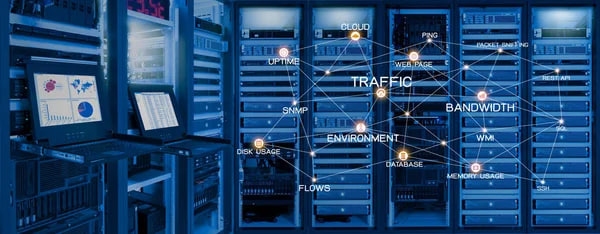
Modern organizations depend on interconnected servers and endpoints, making IT environments more complex. A single performance issue or unexpected outage can interrupt your critical operations. That’s where system monitoring tools can be useful.
These platforms allow you to monitor infrastructure health and performance. They help administrators identify any problems at an early stage.
We will examine six of the leading system monitoring tools available in 2026. These solutions offer the features and insights needed to keep your systems performing smoothly!
| Tool | Best For | Deployment Options | Starting Price |
|---|---|---|---|
| Atera | IT teams and MSPs | Cloud-based | $149/technician/month |
| PRTG | Comprehensive infrastructure and network monitoring | On-premises | $200/month |
| Zabbix | Scalable open-source monitoring | On-premises, Cloud, Public Cloud | Free software; support plans from $325/month |
| Datadog | Cloud-native and hybrid environments | Cloud-based | From $15/host/month |
| Dynatrace | Advanced observability and automation | Cloud, Hybrid Cloud, On-premises | From $7/host, advanced from $58 per host |
| New Relic | Full-stack observability | Cloud-based | Free tier available; Core Users from $49/user/month |
Why Do You Need System Monitoring Tools?
IT infrastructure is no longer a collection of isolated components. All of its elements and devices constantly interact with one another. They create dependencies that might significantly complicate troubleshooting.
As management expert Russell Ackoff famously once said,
“A system is never the sum of its parts; it’s the product of their interaction.”
This principle perfectly describes modern IT environments. System performance problems can result from interdependencies between components.
System monitoring tools help you understand these interactions. They collect and analyze performance data from your entire infrastructure.
Some of the key benefits of these tools include:
- Proactive issue detection;
- Lower downtime;
- Improved performance;
- Enhanced visibility;
- Capacity planning;
- Security monitoring;
- Compliance.
The right monitoring tool will help you improve your reliability and overall operational resilience.
Top 6 System Monitoring Tools
Many organizations continue to adopt hybrid and multi-cloud architectures in 2026. So, system monitoring has evolved from a useful IT function into a business necessity. You need an appropriate toolkit to keep up with this tendency.
Here are some of the instruments worth your attention.
Atera

Atera combines remote monitoring and AI-powered support within a single platform. Its standout capability is Robin, an autonomous IT agent. It can handle support requests from start to finish with minimal human intervention.
Robin gathers the necessary technical information and executes approved remediation actions across all endpoints. Next, it verifies the outcome and continuously improves its ability to address future incidents.
Atera also offers a comprehensive suite of IT management tools. You can use it to
- Monitor devices in real time
- Automate repetitive maintenance tasks
- Manage software deployments
- Apply patches across systems
This platform also includes a built-in service desk that helps you streamline ticket handling and improve collaboration.
Asset management is another key strength of this tool. It provides a centralized inventory for tracking hardware and software resources. Plus, Atera enables you to evaluate performance metrics and service quality precisely.
Flexible contract management and billing tools also make Atera an attractive option for MSPs that need to manage their customer relationships and service agreements efficiently.
Their plans start at $149 per technician per month. It is particularly suitable for organizations seeking an all-in-one IT management platform with AI capabilities.
PRTG
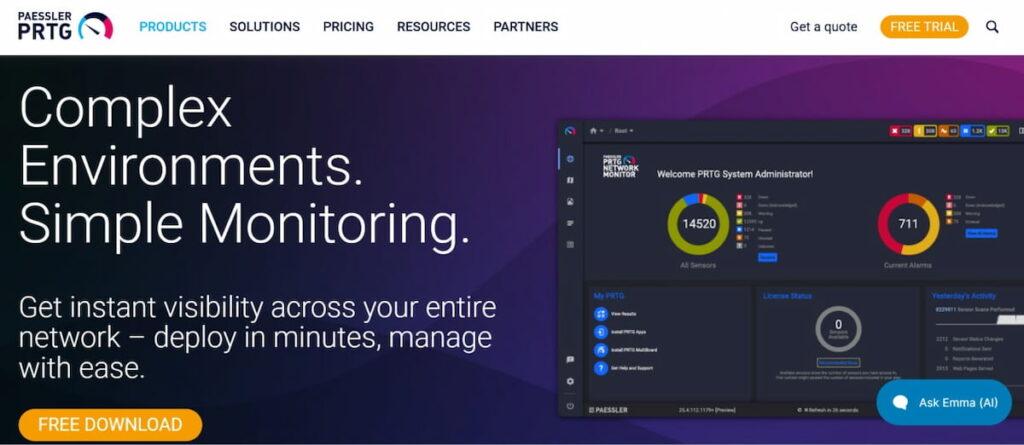
PRTG Network Monitor is a comprehensive infrastructure monitoring solution. It provides visibility into all your networks and connected devices from a single interface.
This platform uses a sensor-based approach that allows you to monitor virtually every aspect of your infrastructure. You can use it to track
- Network traffic;
- Database performance;
- Server health;
- Cloud resources;
- SNMP-enabled devices.
PRTG also offers a strong visualization functionality. You can create custom dashboards and network maps that display the current status of your systems. So, you can easily identify bottlenecks or unusual behavior.
Plus, this tool provides robust alerting capabilities. You can define custom thresholds and receive notifications through various channels.
PRTG supports extensive customization through APIs and custom sensors. So, you can expand monitoring beyond the platform’s native capabilities.
The plans for this tool start at $200 per month.
Zabbix
Zabbix is an open-source tool for scalable monitoring. It offers a unified view of your IT and operational technology systems.
One of Zabbix’s most significant advantages is its cost model. It does not charge licensing fees or impose per-device pricing. You can monitor unlimited hosts and metrics.
You can install the open-source version on your own infrastructure for maximum control. You might also use Zabbix Cloud, which offers a fully managed SaaS platform. Support is also available for major public cloud providers.
Plus, Zabbix offers
- Strong security controls;
- High availability;
- Scaling as infrastructure requirements evolve.
Managed service providers can also take advantage of the platform’s multi-tenant functionality. They simplify monitoring and management across multiple customer environments.
Its support subscriptions start at $325 per month for the Silver tier. Yet, the software itself remains free to use regardless of deployment size.
DataDog
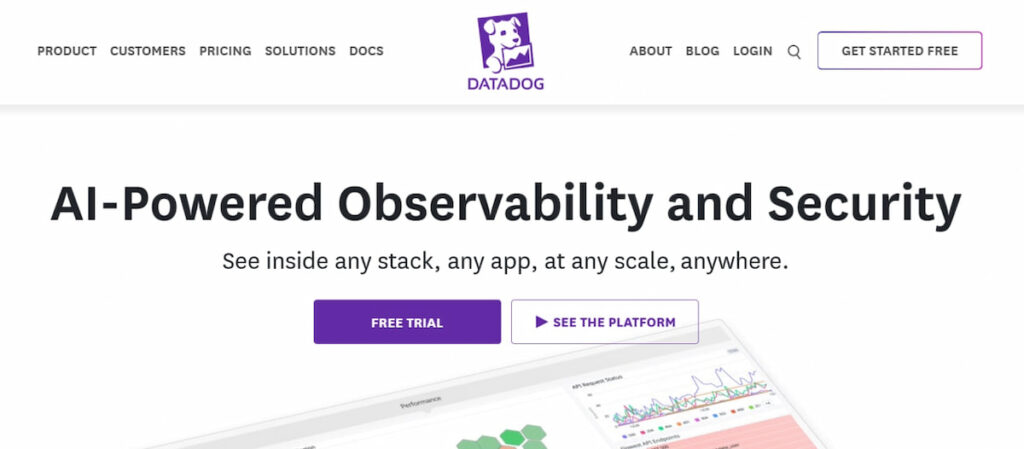
Datadog is a cloud platform for observability and security. It helps you keep track of your IT systems in one place.
Datadog has an extensive ecosystem of integrations. This tool supports hundreds of technologies and development tools.
This platform combines
- Infrastructure monitoring;
- Application performance monitoring;
- Network visibility;
- Log management;
- Security analytics.
It provides real-time insight into your system performance via metrics and events. Its AI capabilities automatically highlight any issues that require your attention.
The platform also includes advanced network monitoring features. They let you assess traffic flows across the cloud environment and physical network devices.
Security is another major focus. Datadog continuously tracks compliance requirements while offering visibility into potential risks.
This tool includes a free plan, while paid options start at $15 per host.
Dynatrace
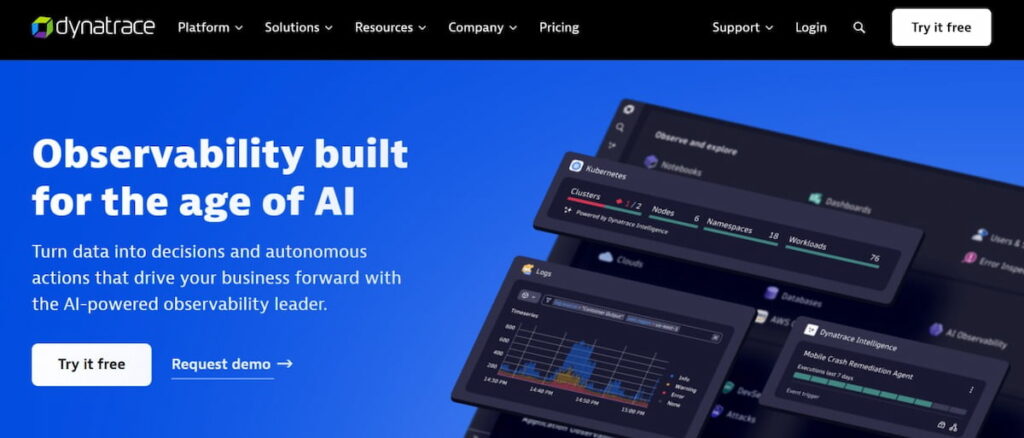
Dynatrace is an observability platform for enterprise use. It delivers full visibility into your environment using AI.
This tool automatically discovers and maps relationships between your
- Applications;
- Services;
- Containers;
- Hosts;
- Databases;
- Cloud resources.
This dependency-aware approach enables you to understand how every component interacts and determine any performance issues.
Dynatrace delivers extensive application performance monitoring capabilities. You can trace transactions across distributed systems and analyze database performance without extensive manual configuration.
Another important feature of this platform is its AI engine. It evaluates your monitoring data to detect anomalies and prioritize critical issues.
This solution also includes digital experience monitoring. So, you can evaluate website and application performance from the user’s perspective.
Pricing starts at $7 per host for foundational infrastructure visibility. More advanced observability capabilities are available for $58 per host.
New Relic
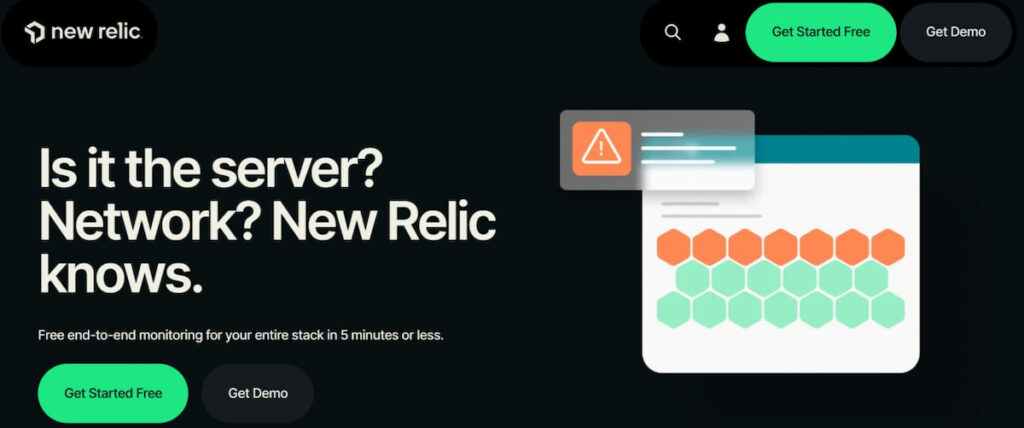
New Relic is an observability platform that can cover your entire technology stack.
This solution supports monitoring across on-premises systems and modern distributed applications. It can offer you a combination of
- Application performance monitoring;
- Infrastructure monitoring;
- Log management;
- Network observability.
This platform can also correlate telemetry data from multiple sources. You can analyze metrics and logs together to determine the origin of issues. This approach shortens troubleshooting time and improves your incident response initiatives.
New Relic also offers a large integration ecosystem. You can use its custom dashboards to visualize your KPIs and create individual monitoring experiences.
Its error tracking and AI observability help you accelerate software delivery. The platform has also expanded its capabilities to support monitoring AI applications.
You can start with a generous free tier that includes data ingestion allowances and unlimited basic users. Core user licenses start at $49 per user.
Picking the Right System Monitoring Tools
The right monitoring tool depends on your environment’s size and infrastructure complexity. Monitoring platforms ultimately aim to improve your observability and limit downtime. However, they are different in features and scalability.
Assess Your Requirements
You have to identify what you need to monitor. Smaller organizations may only require basic server and device monitoring. Larger enterprises usually need full-stack observability that includes
- Applications;
- Containers;
- Cloud services;
- Databases;
- User experience monitoring;
- Security analytics.
You need a platform that matches your current needs while leaving space for future expansion.
Simple Deployment
Ease of deployment is another important consideration. Some solutions emphasize fast implementation with minimal configuration. Others might offer more customization opportunities.
You can use SaaS platforms to reduce maintenance demands if you have limited IT resources. Yet, you might need self-hosted solutions if you have some compliance constraints.
AI Features
You also have to assess whether the tool has automation and AI capabilities. Modern monitoring platforms can automatically
- Discover infrastructure components;
- Detect anomalies;
- Correlate events;
- Identify root causes;
- Remediate issues.
These features can reduce your operational workloads and improve incident response times. Businesses building an eCommerce marketplace platform with CS-Cart can use these capabilities to maintain high availability, automate operations, and support long-term marketplace growth.
Integration Possibilities
You shouldn’t ignore integration support as well. Top monitoring tools will easily connect with your current
- Infrastructure;
- Cloud platforms;
- Ticketing systems;
- Collaboration tools;
- Security solutions.
Strong integration capabilities enable you to create a unified operational workflow and avoid information silos. They also make it easier to connect with all-in-one marketing marketing platforms, allowing teams to align operational data with marketing insights, streamline cross-functional workflows, and gain a more comprehensive view of business performance.
Pricing
Lastly, you have to consider the total cost of ownership. All these tools have diverse licensing structures. You can use open-source options to reduce licensing costs, but they require additional infrastructure to manage. You have to evaluate upfront and long-term costs to ensure the potential solution will deliver the value you need.
Conclusion
IT environments continue to grow more distributed and complex. So, system monitoring is a critical component of maintaining your performance and security.
The right monitoring solution will deliver valuable insights and accelerate troubleshooting. They can help you avoid costly outages that might affect your users.
You should evaluate your current infrastructure and future growth objectives to make a decision. The proper option will help you build a more reliable IT environment.